Imagine getting into a sudden fender bender on your morning commute, or waking up to a burst pipe that floods your living room. Beyond the immediate stress, the first question that usually pops into your head is: “How much is this going to cost me?”
That is where insurance comes in. At its core, insurance is a financial safety net. It transfers risk from you to an insurance company. You pay a small, predictable fee each month (your premium), and in exchange, the insurer agrees to absorb the massive, unpredictable costs of a worst-case scenario.
Navigating the sheer variety of policies available can feel overwhelming. This guide breaks down the essential types of insurance—from core personal coverage to income protection and business policies—so you can build a safety net tailored to your life stage.
1. Personal Insurance Essentials (The Core Four)
These four policies form the foundation of almost every personal financial plan.
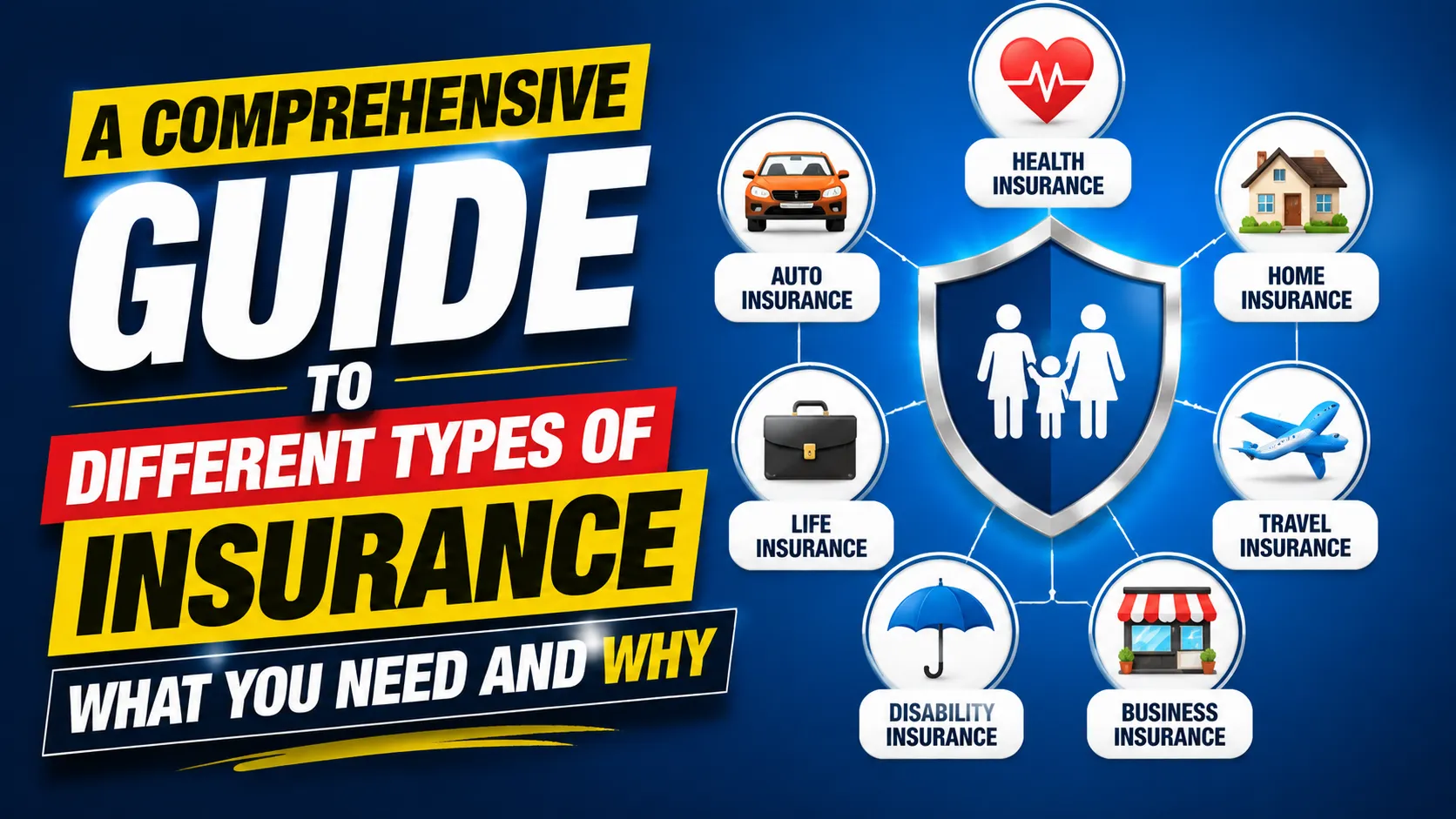
The Personal Core Four Insurance Types
- Health Insurance: Covers medical bills, hospital stays, and preventive care.
- Auto Insurance: Covers vehicle liability (injuries/damage caused to others) and physical damage to your car.
- Home / Renters Insurance: Protects your physical property, personal belongings, and personal liability.
- Life Insurance: Delivers financial protection and ongoing support for your dependents.
Health Insurance
Medical debt remains one of the leading causes of personal bankruptcy in the United States. Health insurance helps offset the astronomical costs of doctor visits, hospital stays, prescriptions, and surgeries.
- HMO (Health Maintenance Organization): Typically offers lower monthly premiums and out-of-pocket costs, but requires you to see providers within a strict network and get referrals from a primary care physician (PCP) to see specialists.
- PPO (Preferred Provider Organization): Offers greater flexibility to see out-of-network doctors and specialists without a referral, though monthly premiums are generally higher.
- HDHP + HSA (High-Deductible Health Plan with Health Savings Account): Pairs a lower monthly premium with a higher deductible. It unlocks access to an HSA, which offers a triple-tax advantage: contributions are tax-deductible, growth is tax-free, and withdrawals for qualified medical expenses are tax-free.
Auto Insurance
If you drive, auto insurance is legally required in almost every jurisdiction. However, basic state-minimum requirements rarely offer total financial protection.
- Liability Coverage: Pays for bodily injury and property damage you cause to other people. It does not cover damage to your own vehicle.
- Collision Coverage: Pays to repair or replace your car after an accident with another vehicle or object, regardless of fault.
- Comprehensive Coverage: Protects your car against non-collision incidents, such as theft, vandalism, extreme weather, falling tree limbs, or striking an animal.
Homeowners & Renters Insurance
Your home is often your largest asset—or, if you rent, houses everything you own.
- Homeowners Insurance: Covers physical damage to the structure of your home, personal belongings inside, and guest liability if someone is injured on your property.
- Renters Insurance: Covers your personal belongings and personal liability. Note: Your landlord’s insurance policy only covers the physical building, not your clothes, electronics, or furniture.
Crucial Warning: Standard homeowners and renters policies do not cover flood or earthquake damage. If you live in an area prone to these hazards, you must buy separate standalone policies or riders.
Life Insurance
Life insurance provides a tax-free payout (a death benefit) to your beneficiaries if you pass away. It is designed to replace lost income, pay off debts, or cover future expenses like a child’s college tuition.
- Term Life Insurance: Provides coverage for a specific period (typically 10, 20, or 30 years). It is straightforward, affordable, and the best fit for roughly 90% of families.
- Permanent / Whole Life Insurance: Covers you for your entire life and includes a “cash value” savings component. It is significantly more expensive than term life and is generally used for complex estate planning.
2. Income & Wealth Protection
While the “Core Four” protect your tangible assets, these policies protect your earning potential and long-term savings.
Disability Insurance
Your ability to earn an income is your most valuable financial asset. Disability insurance replaces 50% to 70% of your pre-tax income if an illness or injury prevents you from working.
- Short-Term Disability: Typically covers the first 3 to 6 months of an inability to work.
- Long-Term Disability: Kicks in after short-term benefits end and can last for 2 years, 5 years, or until retirement age.
Note: Over 90% of long-term disability claims are caused by common medical conditions (such as cancer, heart disease, or back injuries), not catastrophic workplace accidents.
Umbrella Insurance
An umbrella policy provides extra liability coverage that sits on top of your existing auto and homeowners policies.
For example, if your auto policy covers up to $300,000 in liability, but you are found at fault in a major accident resulting in $800,000 in medical bills, your umbrella policy covers the remaining $500,000. Without it, your personal savings, home equity, or future wages could be at risk.
Long-Term Care (LTC) Insurance
Medicare does not cover extended, non-medical daily assistance (like help with bathing, dressing, or eating). Long-term care insurance helps cover the costs of home health aides, assisted living facilities, or nursing homes, protecting your retirement savings from being wiped out in your later years.
3. Specialized & Business Coverage
Specialized Personal Policies
- Pet Insurance: Helps cover unexpected veterinary bills for accidents, illnesses, and emergency surgeries.
- Travel Insurance: Reimburses non-refundable trip costs if you have to cancel due to illness, and covers emergency medical evacuations while abroad.
Business Insurance Essentials
If you own a business or work as a freelancer, personal policies usually exclude business-related claims.
| Policy Type | What It Covers |
| General Liability | Third-party bodily injury, property damage, or slip-and-fall claims on your business premises. |
| Professional Liability (E&O) | Claims alleging financial harm caused by mistakes, negligence, or bad advice in your professional services. |
| Cyber Liability | Data breaches, ransomware attacks, and compromised customer data. |
4. How Much Coverage Do You Need?
Choosing the right amount of coverage comes down to balancing monthly premiums against your personal risk tolerance and financial buffer.
The Deductible Rule of Thumb:
- Higher Deductible = Lower Monthly Premium. (Best if you have a solid 3–6 month emergency fund to cover out-of-pocket costs).
- Lower Deductible = Higher Monthly Premium. (Best if cash flow is tight and an unexpected $1,000 expense would cause financial distress).
Insurance Priorities by Life Stage
| Life Stage | High Priority | Secondary Priority |
| Young Adult / Single | Health, Auto, Renters, Disability | Basic Term Life (if debts are co-signed) |
| Family with Dependents | Health, Term Life, Homeowners, Auto | Disability, Umbrella Insurance |
| Pre-Retirees & Retirees | Health / Medicare, Long-Term Care | Umbrella, Estate Planning |
5. Three Common Insurance Mistakes to Avoid
- Buying Based Solely on Price: Choosing the cheapest policy often means selecting state-minimum liability limits that leave your assets vulnerable in a lawsuit.
- Skipping Annual Audits: Life changes quickly. Getting married, buying a house, having a child, or starting a side hustle are all triggers to review and adjust your coverage limits.
- Ignoring Policy Exclusions: Never assume you are covered for every scenario. Always check policy fine print for exclusions regarding flood, mold, or specific high-value items like jewelry.
Summary
Insurance isn’t about planning for the worst—it’s about protecting the life and financial foundation you are building. Start by securing your core essentials (Health, Auto, Home/Renters, and Life), build an emergency fund to support reasonable deductibles, and review your coverage once a year to ensure your policies grow along with you.